Participatory research · Comics · Survey design · 2024 to present

Comic
Survey
Lab

What changes when a survey stops behaving like a form and starts behaving like a visual, sequential and participatory interface?

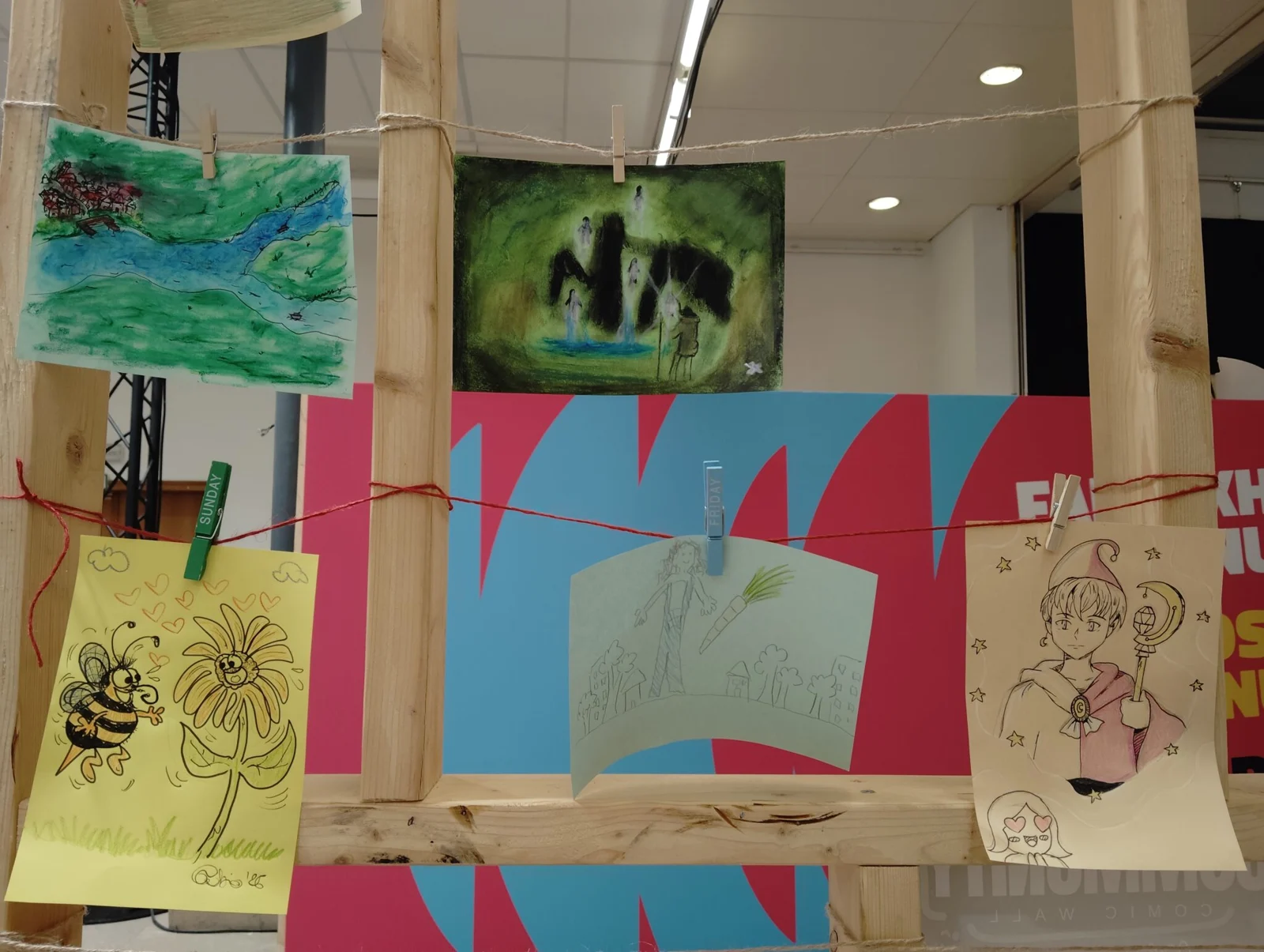
Hand-drawn participant contributions hanging on the Community Comic Survey Wall
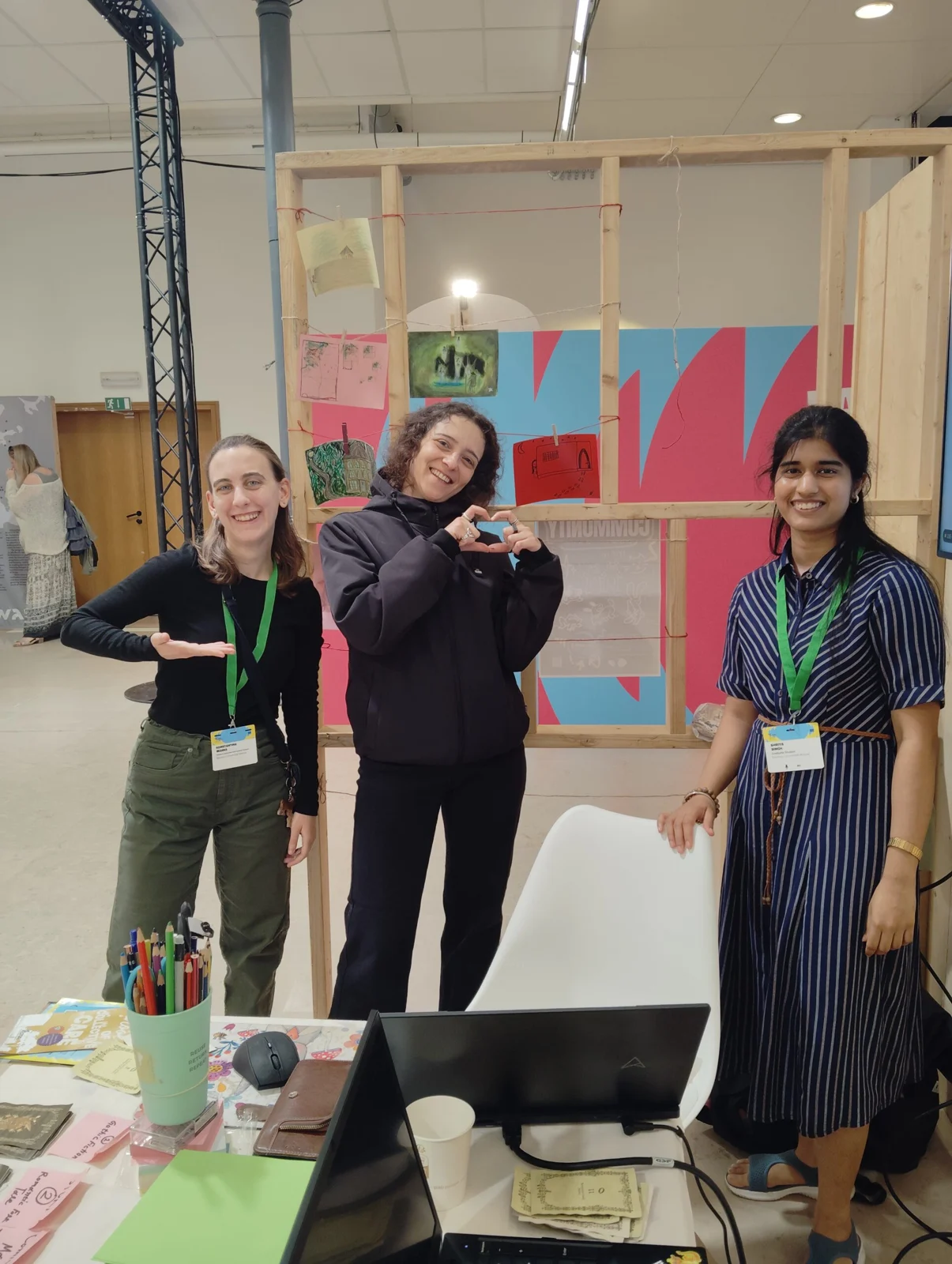
The Comic Survey Lab team at the public installation
A survey can ask with images, space, sequence and play.
BeginningFour co-design workshops
Research outputMuC paper and poster
Public formsWUD presentation and Brussels installation
My roleCo-founder, researcher, facilitator and designer

Not illustration after the fact

Comics can change the logic of a research question.

Traditional surveys often separate the question from the context needed to understand it. With Konstantina Marra, I began exploring whether panels, characters, visual metaphors, sequence and different forms of response could make a survey more legible, expressive and open to participant interpretation.

Comicification means using the structures of comics as part of the research interaction, not simply decorating a conventional questionnaire.

The work also keeps a critical question visible: every visual frame influences interpretation. The goal is not to claim that comics automatically improve a survey, but to understand what they enable, what they bias and how participants can retain agency.
Research through making together

Artists and researchers redesigned the survey at the same table.

We ran four Redesigning Surveys with Comics workshops. Instead of asking artists to illustrate a finished instrument, the sessions made the survey itself available for reinterpretation. Participants could change its characters, rhythm, framing, order and response modes.

01 · OPEN

Start from a real survey

The researcher brought questions and context rather than a fixed visual brief.

02 · TRANSLATE

Make the question sequential

Artists used panels, scenes, characters and visual transitions to expose assumptions in the text.

03 · REFLECT

Compare interpretations

Feedback and facilitator notes captured where a redesign became clearer, stranger or more directive.

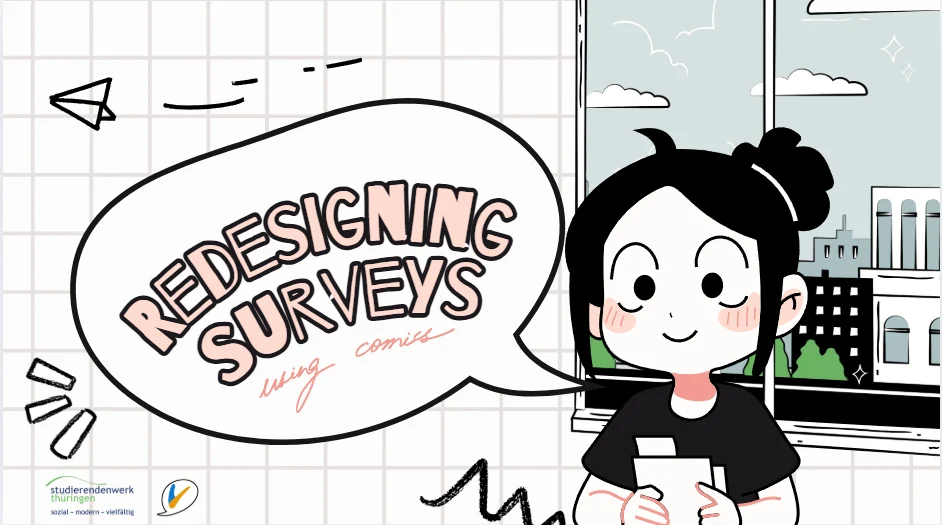
Redesigning Surveys using Comics workshop identity
The workshop series created a recognizable invitation into the research.
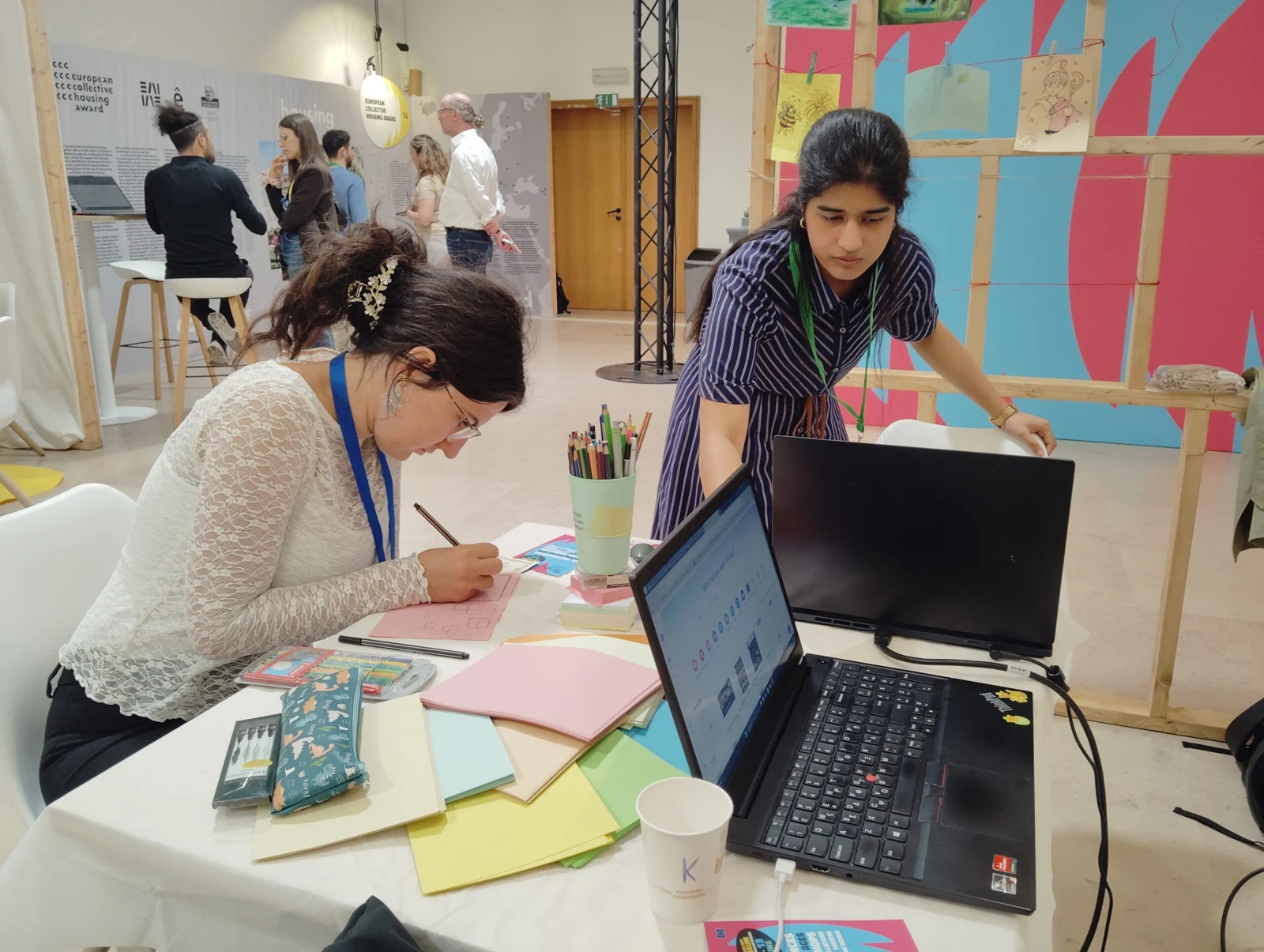
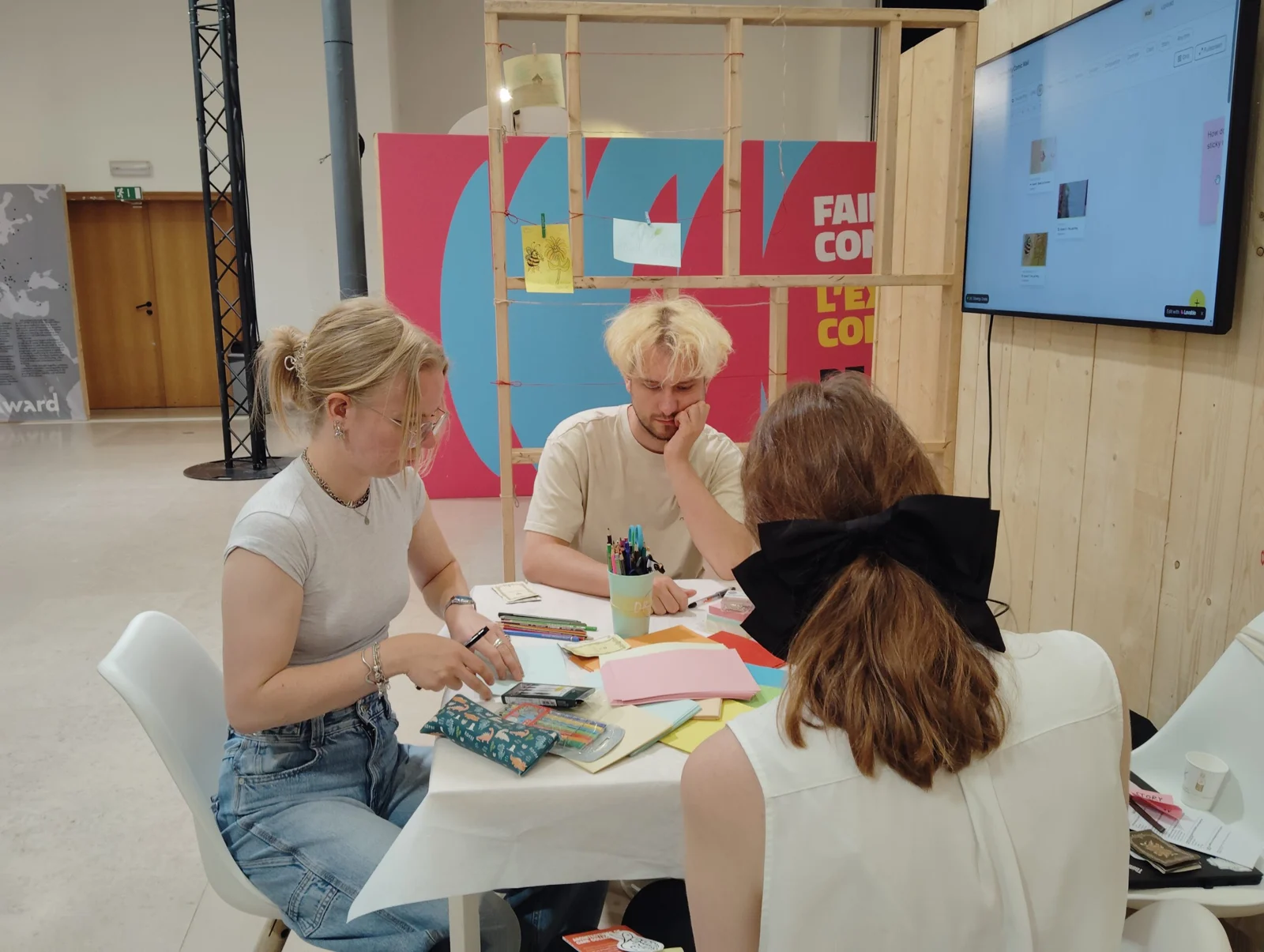
Comic-making materials and participant work at a public table
Materials made response and reinterpretation tangible.

From workshop material to reusable patterns

The workshops became a publication, a poster and a public argument.

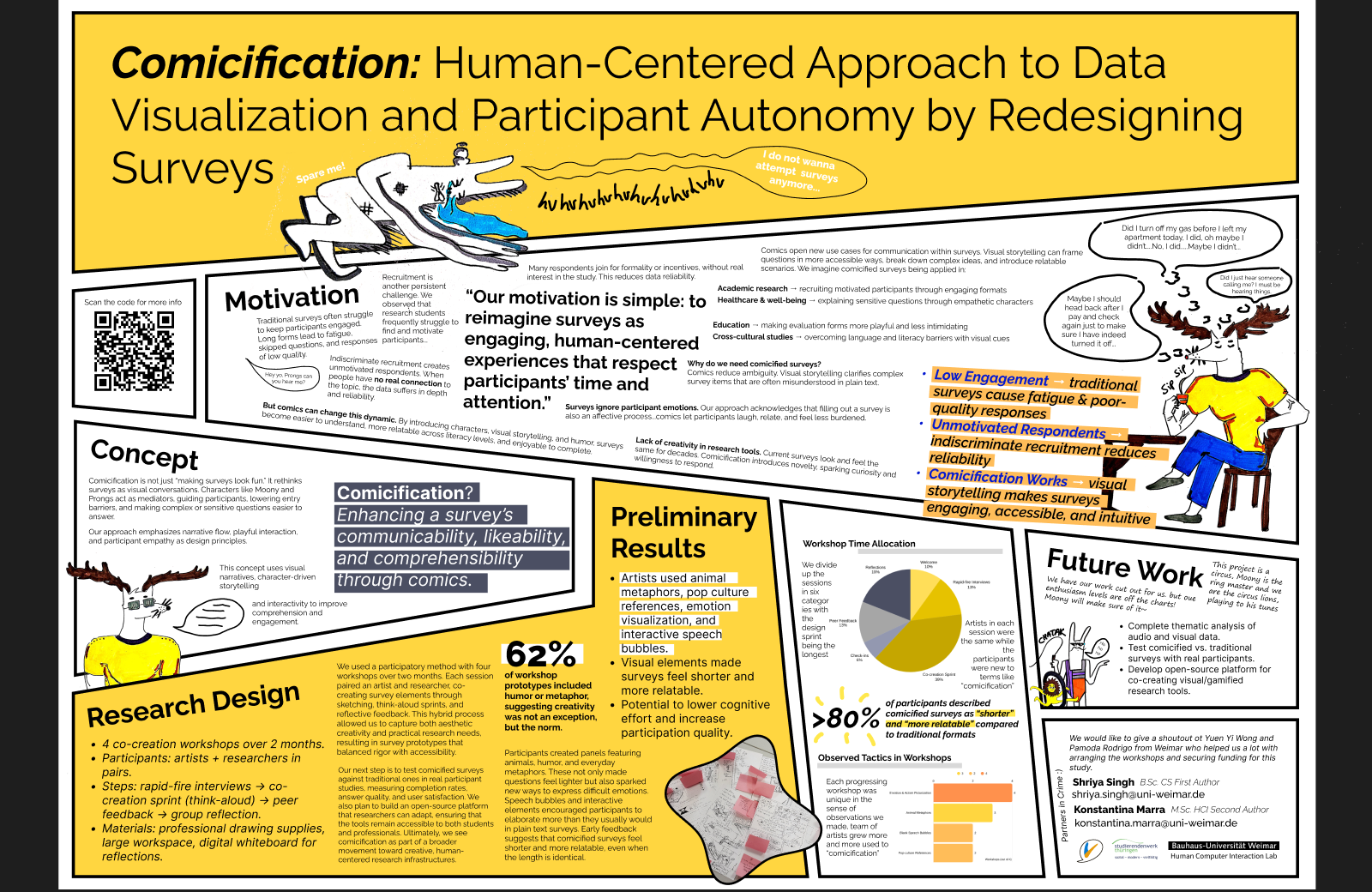
Our initial thematic analysis traced recurring ways artists transformed survey questions: contextual scenes, character-led prompts, sequential disclosure, visual response options and interactive elements. The aim was to identify patterns that future tools could make reusable without flattening the artist's role.

New European Bauhaus Festival 2026

The lab left the workshop room and became a public wall.

For the New European Bauhaus Festival in Brussels, the research became a live Community Comic Survey Lab. Visitors encountered illustrated story scenes, selected techniques and contributed their own visual responses to a wall that changed throughout the event.

2STORY DECKS
12SCENES IN EACH DECK
9TECHNIQUE CARDS
Shriya supporting a visitor drawing at the Community Comic Survey Lab in Brussels
The installation worked as an open making table, not a static exhibition.
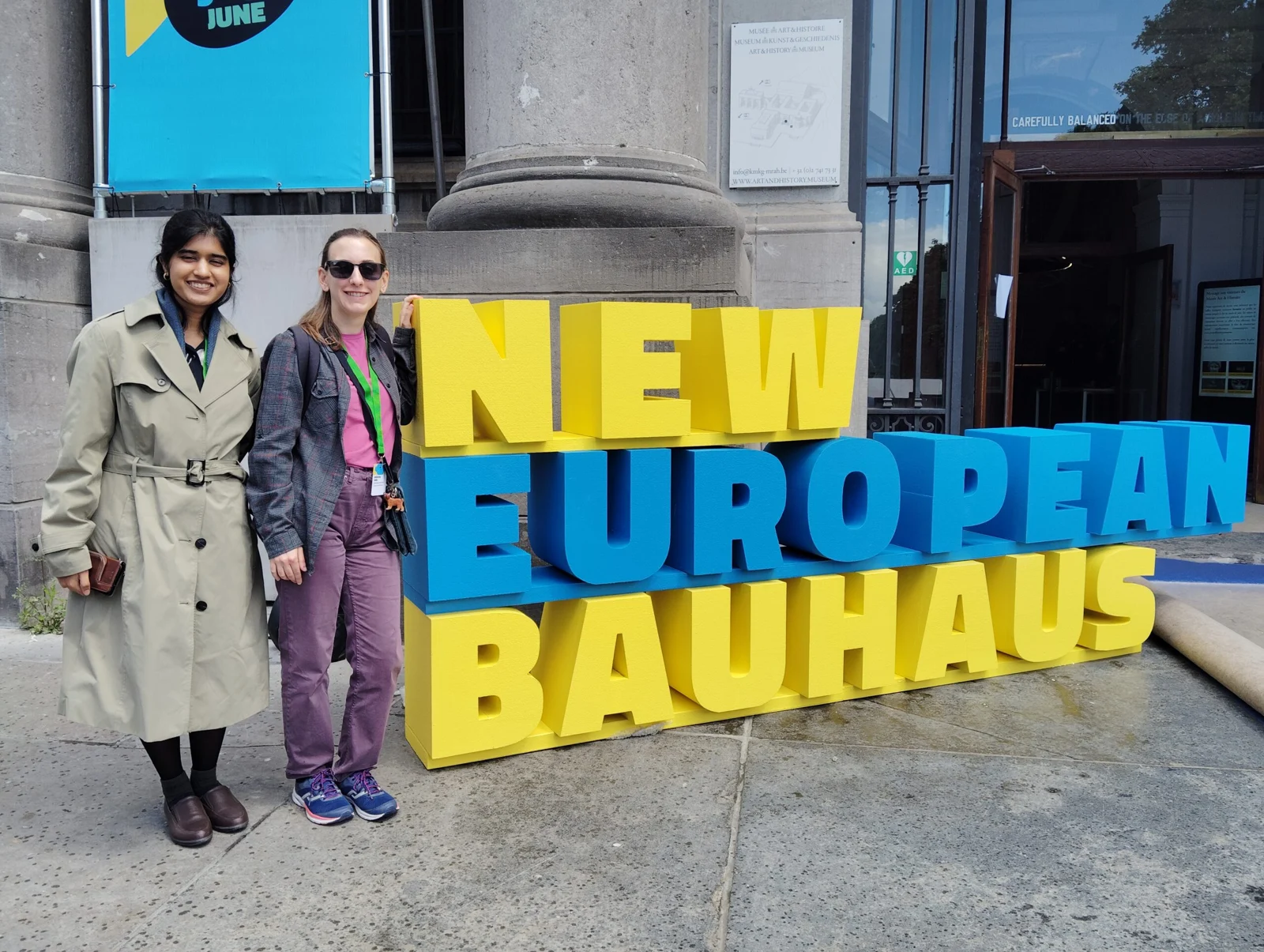
Shriya Singh and Konstantina Marra at the New European Bauhaus Festival
The research team at the New European Bauhaus Festival.

The two story worlds, Gothic Beast on Blackmoor and Shakuntala's Lost Ring, offered different visual and cultural settings. The technique cards drew on Ṣaḍaṅga principles to help people enter the activity without prescribing one correct drawing style.

One question, several forms

The research changed medium without losing its central question.

Workshops produced situated knowledge. Publication made the patterns discussable. The public wall tested participation at a different scale. GUTTR then asked whether those techniques could become reusable tools without flattening the artist's role.

Redesigning Surveys with Comics workshop material
2024–2025Four co-design workshopsArtists and researchers reworked real survey questions together.
Comicification research poster
2025Publication and public argumentPatterns moved into the MuC poster and World Usability Day presentation.
Community Comic Survey Wall in Brussels
2026A public, changing wallVisitors made the research visible through their own responses.
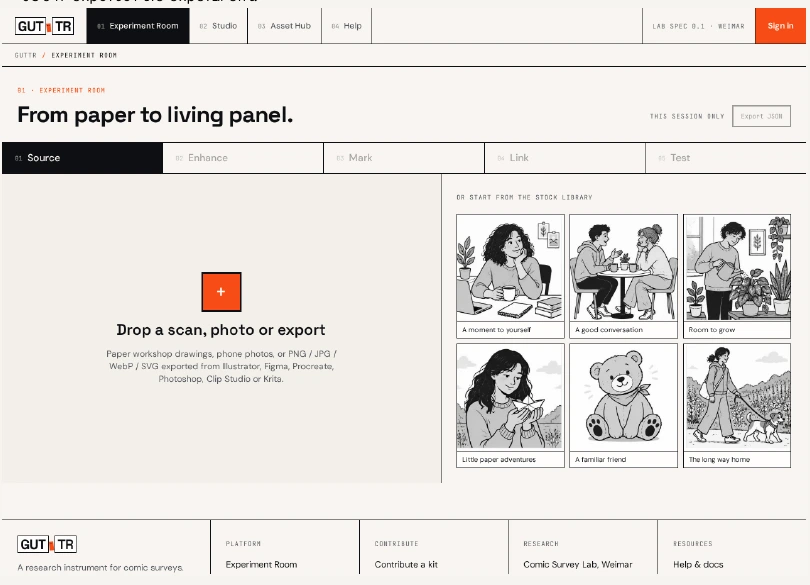
GUTTR Experiment Room interface
2026A product hypothesisCould workshop techniques become a traceable visual survey toolkit?

The product branch

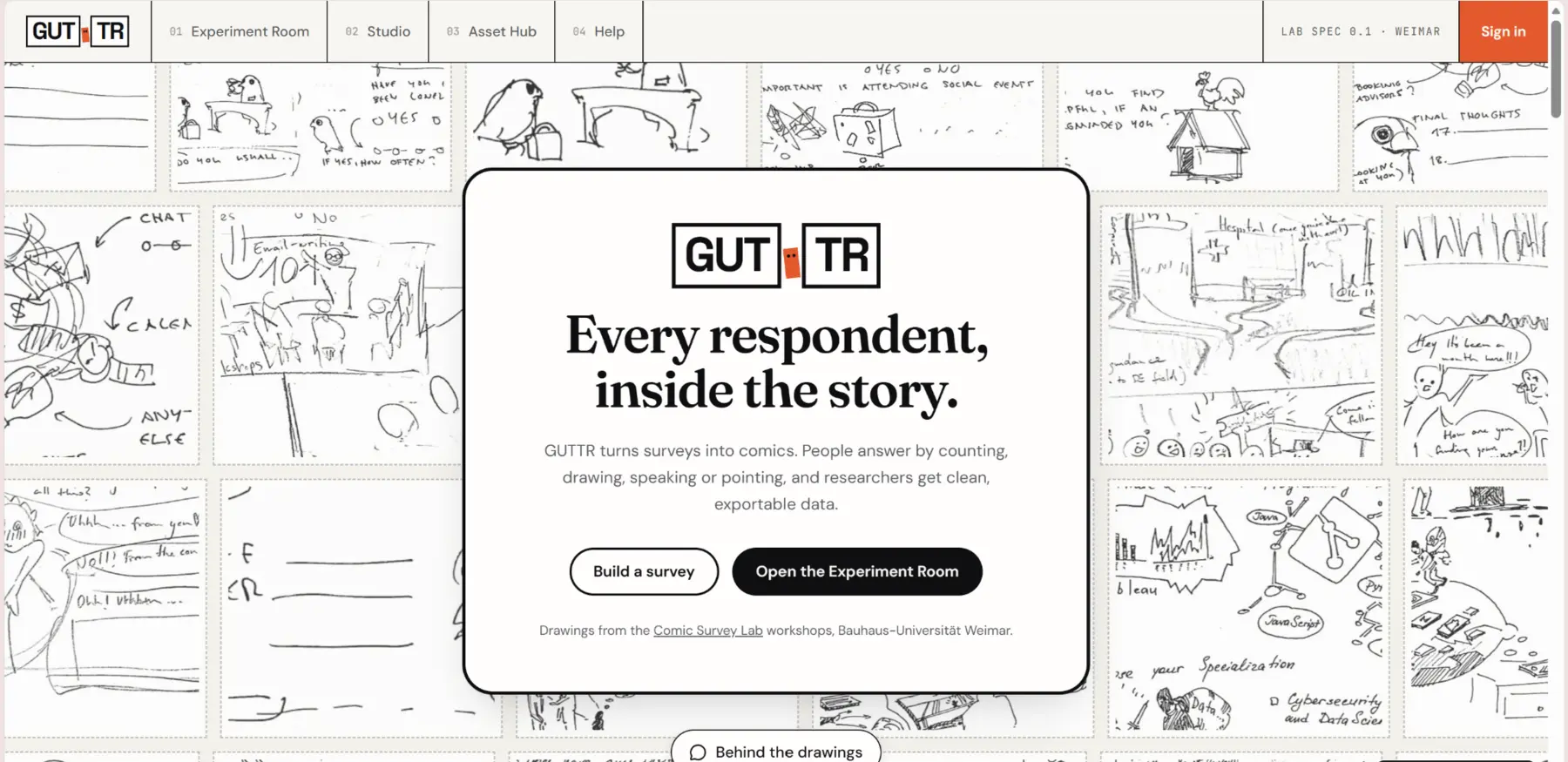
GUTTR turns a research question into a working interface.

The Experiment Room, Studio and Asset Hub translate workshop learning into a survey-building system. It belongs to this lineage, while keeping its own product decisions and limitations visible.

GUTTR homepage with participant drawings behind the product statement

A live study rather than a closed answer

The most useful outcome is a better set of questions.

Comicification creates new possibilities, but it also creates design responsibility. The next stage is not only to make visual surveys easier to build. It is to develop ways to evaluate framing, comprehension, accessibility and cultural interpretation without treating engagement as the only measure of success.

When does a visual prompt clarify, and when does it lead?
How can participants answer beyond predefined boxes?
Which patterns can become reusable without becoming generic?
How should authorship and artistic contribution remain visible?