Game design · worldbuilding · HTML5 · 2024 to 2026

Spirit Me

A village of illusions, nine lost relics and three spirits hiding in plain sight.

For the 2026 release, I independently rebuilt the story presentation, visual system, animations, sound direction and browser experience around the original Bauhaus Gamesfabrik game.

30 SECONDS OF ACTUAL PLAY
PlaceMayapur, the village of illusions
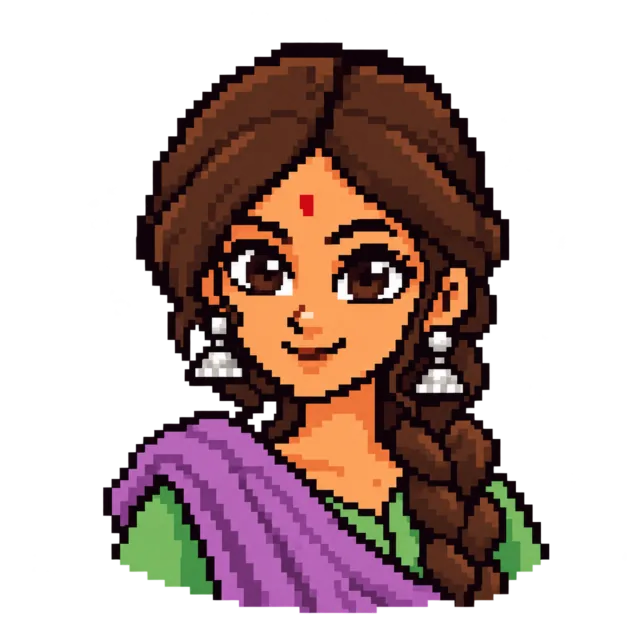
PlayerChutki, a girl trying to get home
QuestNine relics, three hidden spirits
PlatformHTML5 Canvas and JavaScript

From an ordinary game into another reality

A missed Gilli Danda shot sends Chutki down a forest well and into Mayapur.

The village looks familiar, but its residents speak in riddles drawn from old fables and remember almost nothing about who they really are. An unseen narrator tells Chutki that returning home depends on helping the villagers recover their lost possessions and reveal the spirits beneath their human forms.
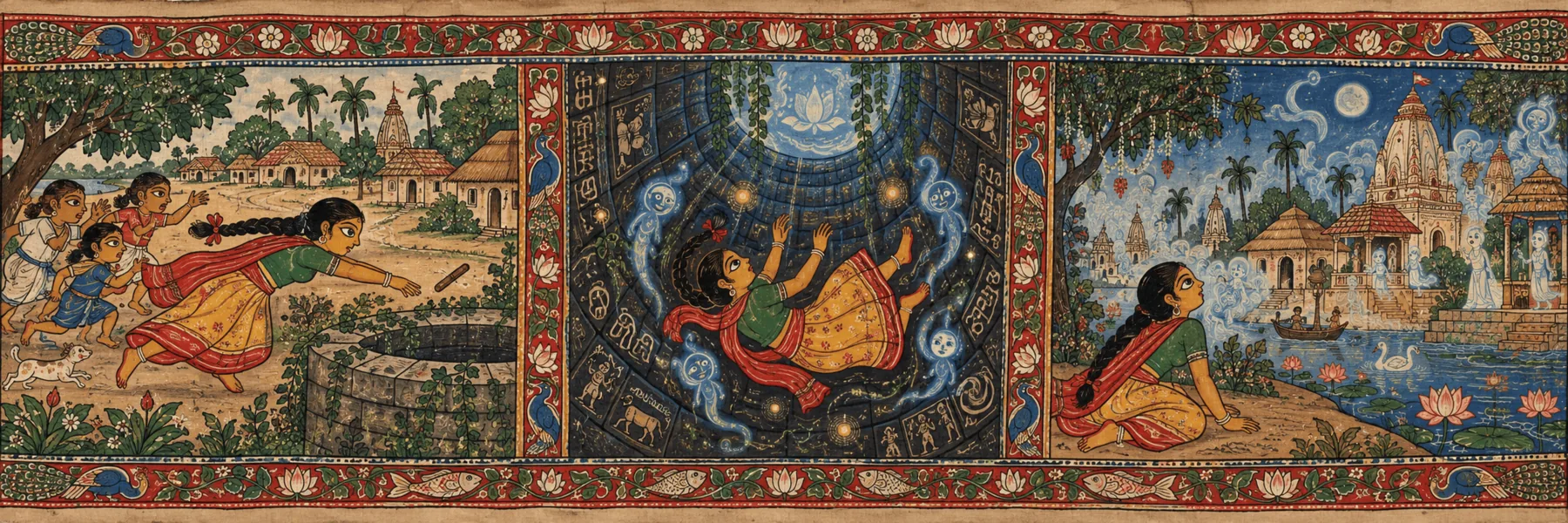
Three-panel Pattachitra-inspired scroll showing Chutki at the well, falling and arriving in Mayapur
The revised opening uses a moving folk-art scroll to carry the player from the forest well into Mayapur.
Mayapur village with Chutki approaching Panditji beneath the banyan tree

A real conversation from the game

Chutki
Chutki

Panditji! Why are you meditating under the banyan tree? How can I help you remember who you are?

1 of 3
Explore, infer, offer, reveal

The mystery is built from movement, dialogue and object association.

The player crosses a compact village, reads each villager's cryptic clues and decides which relic belongs to which story. Correct offerings restore a memory. A wrong offering produces a very different reaction.

01

Explore

Walk or sprint through Mayapur, looking for objects and overlooked paths.

02

Listen

Each resident speaks through a distinct comic voice and a fable-shaped riddle.

03

Connect

Use the inventory to connect three relics with the character whose story they complete.

04

Reveal

The recovered set triggers the villager's transformation into their spirit form.

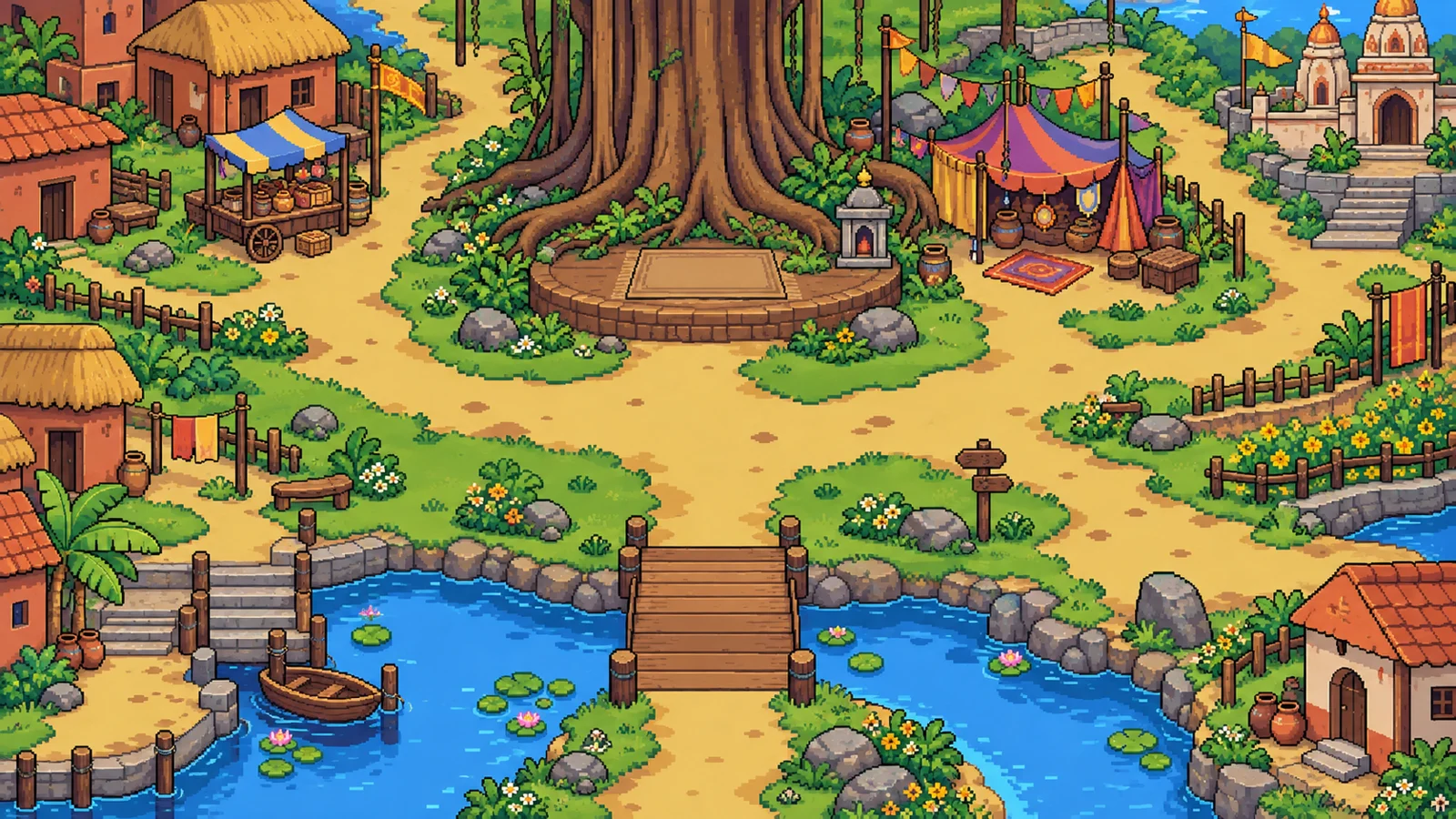
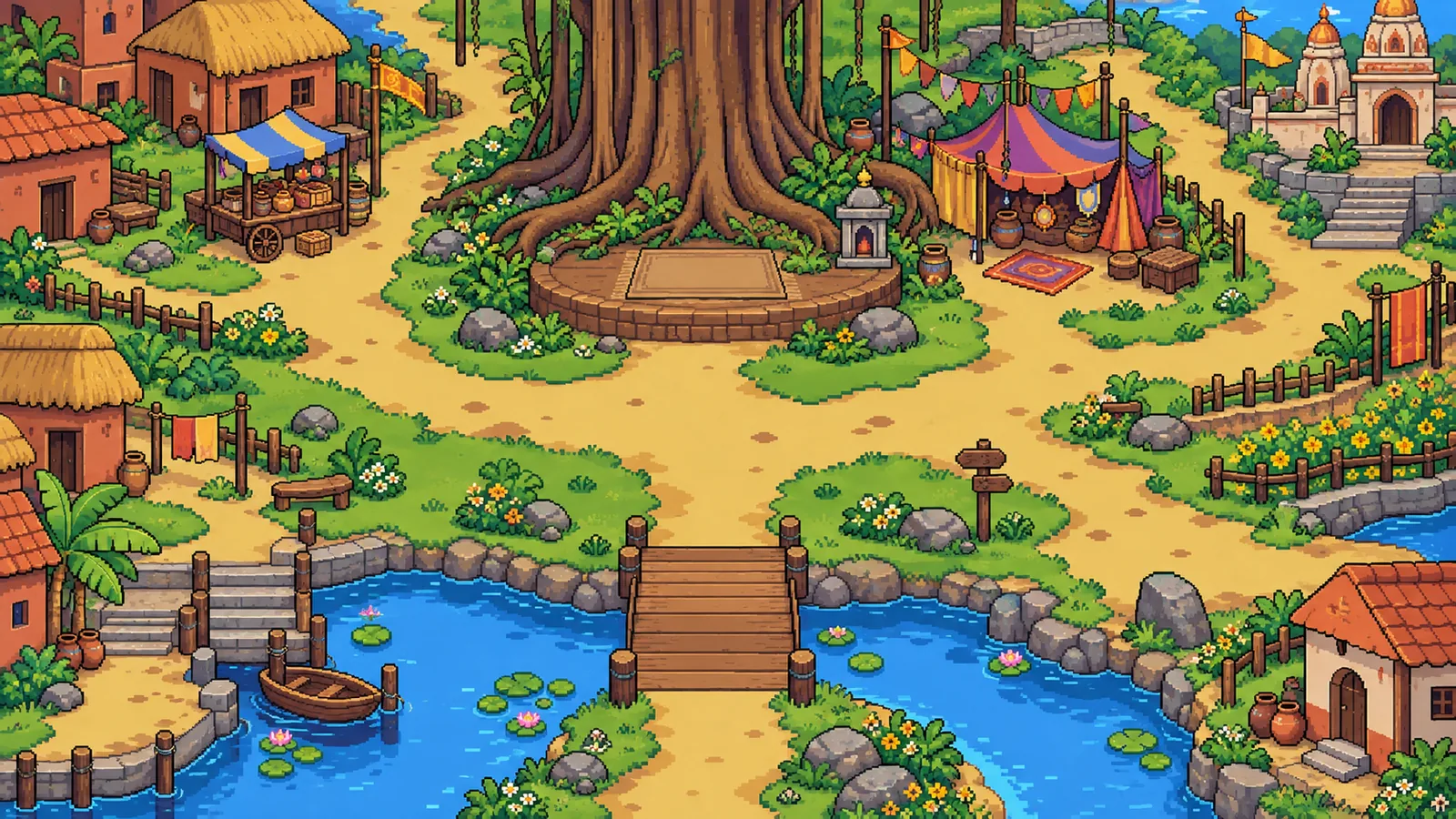
The playable village of Mayapur with banyan tree, bazaar, river and temple paths
Mayapur was rebuilt as a compact explorable environment with clear landmarks and overlapping routes.

Every human silhouette hides a second identity

The characters are puzzles, personalities and transformations at the same time.

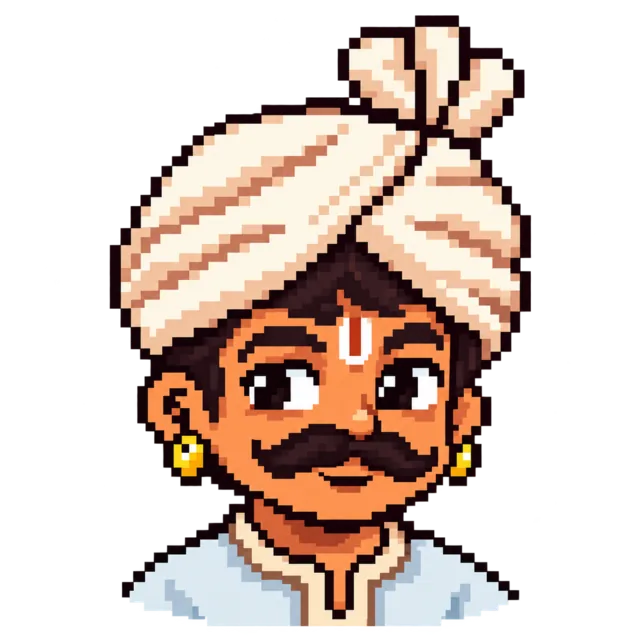
The redesign gives each encounter its own tone. Panditji is philosophical and sly, Sethji turns every exchange into a transaction, and Banjaran meets Chutki with theatrical warmth.

Panditji portraitCrow spirit revealed behind Panditji
Panditji

The crow sage

Slow riddles, humble objects and a philosopher who knows slightly more than he admits.

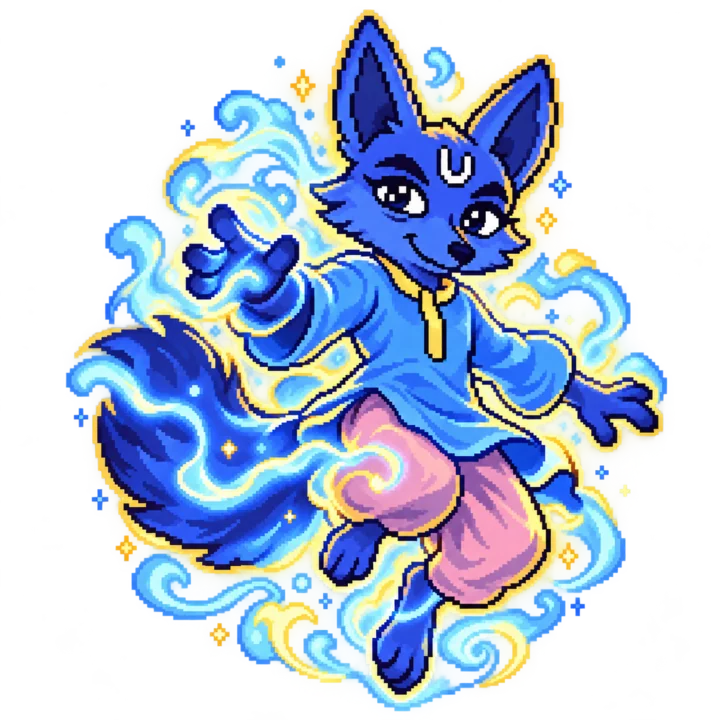
Sethji portraitJackal spirit revealed behind Sethji
Sethji

The jackal merchant

A charming dealmaker whose clues, jokes and promises are never entirely trustworthy.

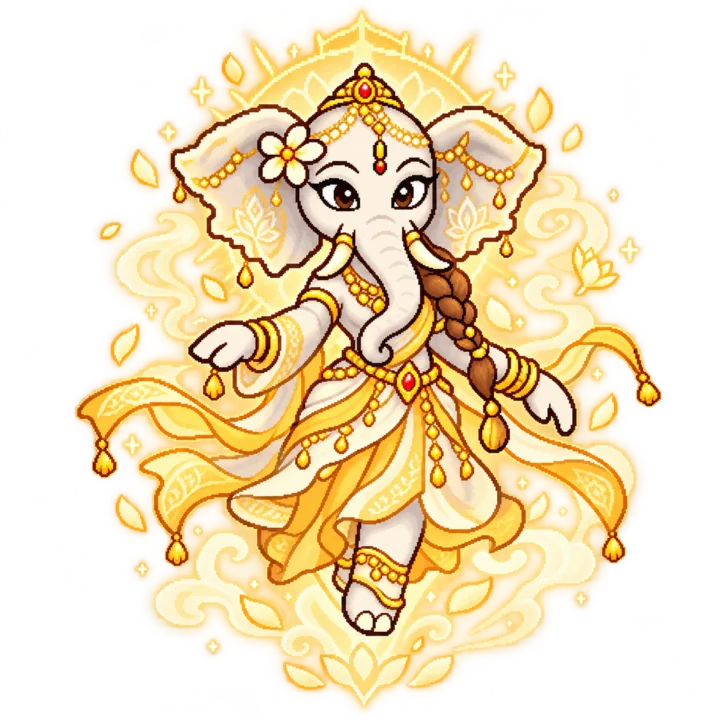
Banjaran portraitElephant spirit revealed behind Banjaran
Banjaran

The elephant traveller

A warm, dramatic traveller whose grandeur and tenderness fill the festival edge of the village.

Four-frame transformations

The reward is not a badge. The character becomes something else in front of you.

Each reveal was designed as a short visual performance with a human pose, a burst of light and a final spirit state. The sequences below use the production sprite strips from the game.

Panditji → crow

Sethji → jackal

Banjaran → elephant

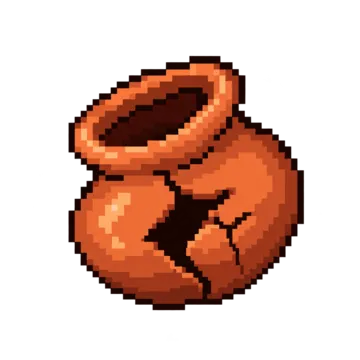
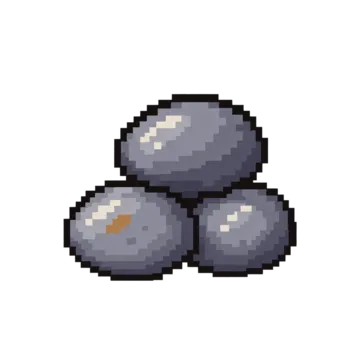
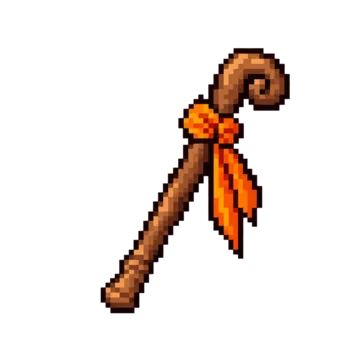
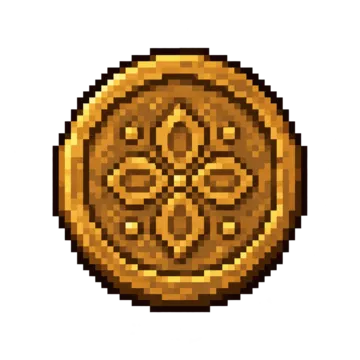
Nine objects make the logic tangible

Players have to read objects as fragments of somebody else's memory.

The inventory is more than a collection counter. It lets players build hypotheses from material, colour, symbolism and dialogue, then test those hypotheses through an offering.

Broken terracotta potBroken terracotta pot
River stonesRiver stones
Saffron-wrapped staffSaffron-wrapped staff
Golden balance scaleGolden balance scale
Golden floral coinGolden floral coin
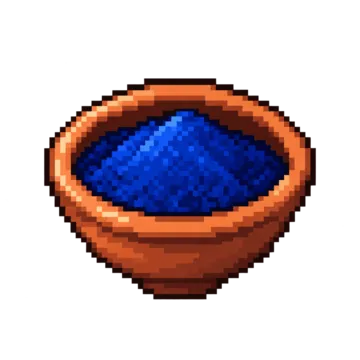
Indigo dye bowlIndigo dye bowl
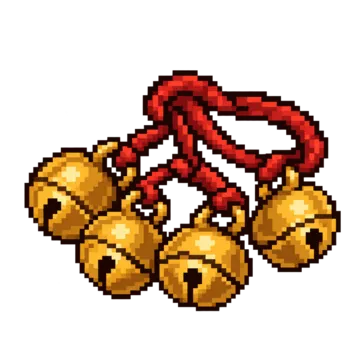
Brass bell bundleBrass bell bundle
Beaded potli pouchBeaded potli pouch
Golden lotusGolden lotus

Returning to the world in 2026

The second release treated the game as a complete experience, not a collection of screens.

I revisited the project through the details that make a small world feel coherent: the opening, how Chutki moves, how characters respond, what an incorrect choice feels like, how transformations arrive and how the story is remembered after play.

STORY

A scroll instead of exposition

The Pattachitra-inspired opening moves through the well, the fall and the arrival without turning the introduction into a wall of text.

GAME FEEL

Running, dust and response

Sprint states, dust-cloud effects, ambient movement and character reactions give actions a visible consequence.

ART DIRECTION

One village, one visual grammar

Portraits, relics, interface frames, backgrounds and transformation effects were rebuilt into a more consistent system.

WEB RELEASE

A browser-native experience

The current release uses a custom HTML5 Canvas and JavaScript engine and can be played without installing a game client.

Credits, kept visible

2026 browser revamp
Independently rebuilt by Shriya Singh across story presentation, visual system, motion, sound direction and web release
Original Bauhaus game project
Shriya Singh, Joyshree Mazumder and Kirti Thakur
Original graphics, animations, story and sound direction
Shriya Singh
Original game design and development
Joyshree Mazumder and Kirti Thakur
Mentorship and support
Gianluca Pandolfo

The case study ends where the game begins

Walk into the village and decide which stories the relics belong to.

The optimized HTML5 build is hosted directly inside this portfolio. Load it here, or open the full-screen version for the largest play area. The itch.io release remains available as the public game record.

Playable HTML5 release

Enter Mayapur?

Keyboard controls work best on desktop. Touch controls are available in the game interface.

MOVE

Arrow keys or WASD

Hold R or Shift while moving to sprint and kick up dust.

INTERACT

Enter, Space or click

Talk to a villager and offer an item from the inventory.

In Mayapur, the puzzle is never only where an object is hidden. It is who the object remembers.

Spirit Me uses a compact adventure loop to connect Indian folktale structures, comic character writing, environmental exploration and the pleasure of a transformation earned through attention.