From a drawing on the page to a story that occupies the room.
An open workshop for comic makers at every level, built around one practical question: what changes when composition can use movement, sound and physical space?
The page was the starting point, not the boundary.
Augmented reality gives a comic access to the room around it. A panel can gain depth. A character can move. Sound can change the atmosphere. The workshop translated that broad possibility into a process participants could enter without needing code or a polished drawing practice.
What happens when composition includes the space around the comic?
One route, different starting points
Make something small, separate its parts, then let it enter the world.
STEP 01
Make
Draw a new comic or bring an existing one. Paper, tablet and stylus were all valid beginnings.
STEP 02
Prepare
Digitise the work, isolate characters and panels, and export useful visual elements.
STEP 03
Place
Upload the elements to STYLY and compose them in relation to physical space.
STEP 04
Augment
Add motion, sound, scale and environmental effects, then share what changed.
The hands-on format gave participants room to begin with discussion, paper or digital tools.
Low threshold, spatial outcome
The tools were chosen to keep attention on the comic, not the software.
The workshop combined familiar drawing and image preparation tools with a browser-based AR platform. Each tool had a narrow job, making the transition from panel to spatial scene easier to understand.
DRAW
Krita or any familiar tool
Participants could work digitally or begin by making something on paper.
remove.bg
PREPARE
Background removal
remove.bg helped turn drawn characters and objects into transparent assets that could move independently.
BUILD
STYLY
A no-code environment provided free project hosting and a relatively gentle route into spatial publishing.
A vocabulary for augmenting comics
Participants did not need to invent the interaction model from nothing.
I introduced three structures for thinking about the relationship between comic elements, artificial environments and the physical world. They served as compositional prompts, not rigid templates.
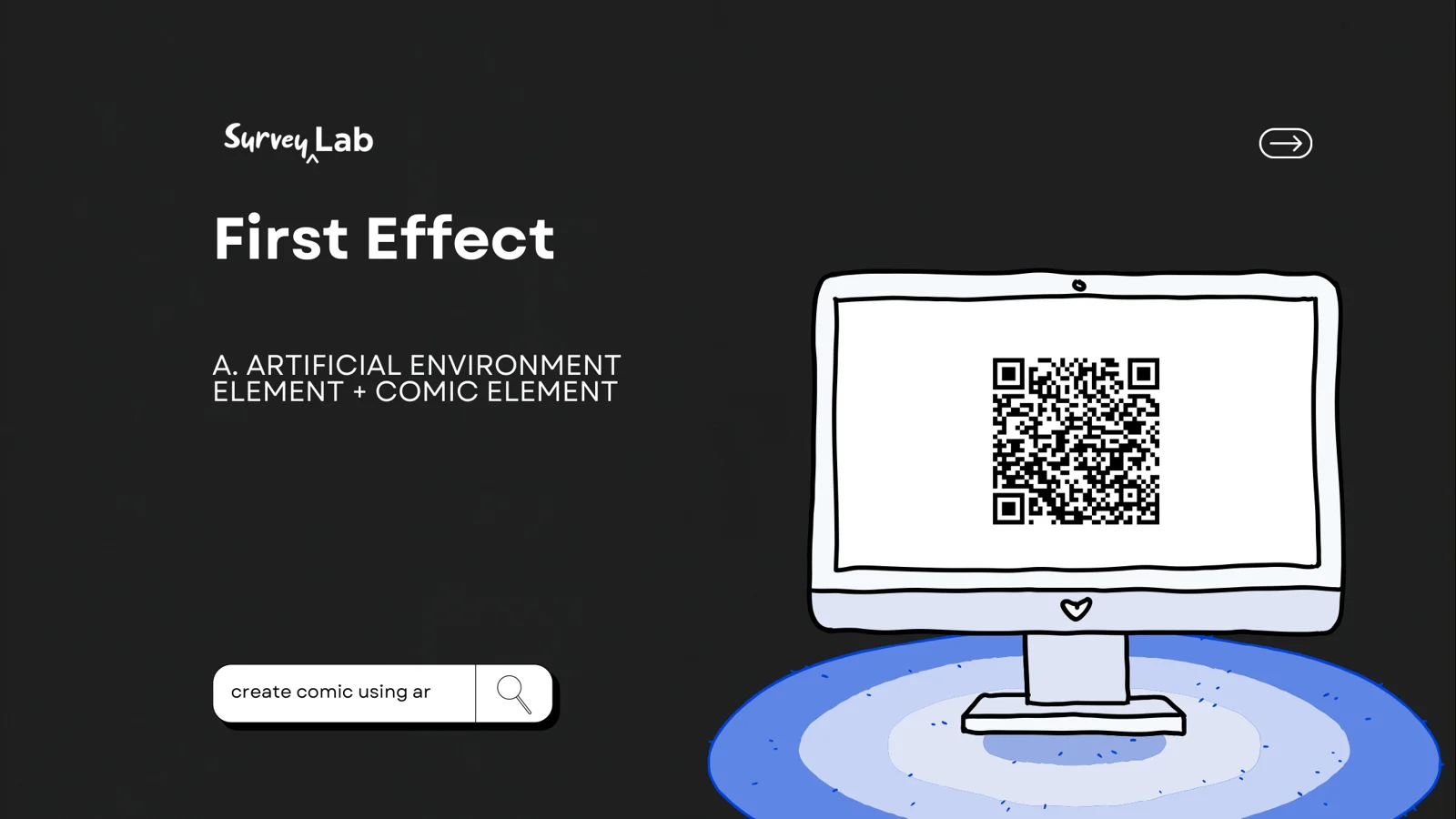
Build an artificial environment
A comic element is composed inside a constructed AR setting.
Comic element + artificial environment
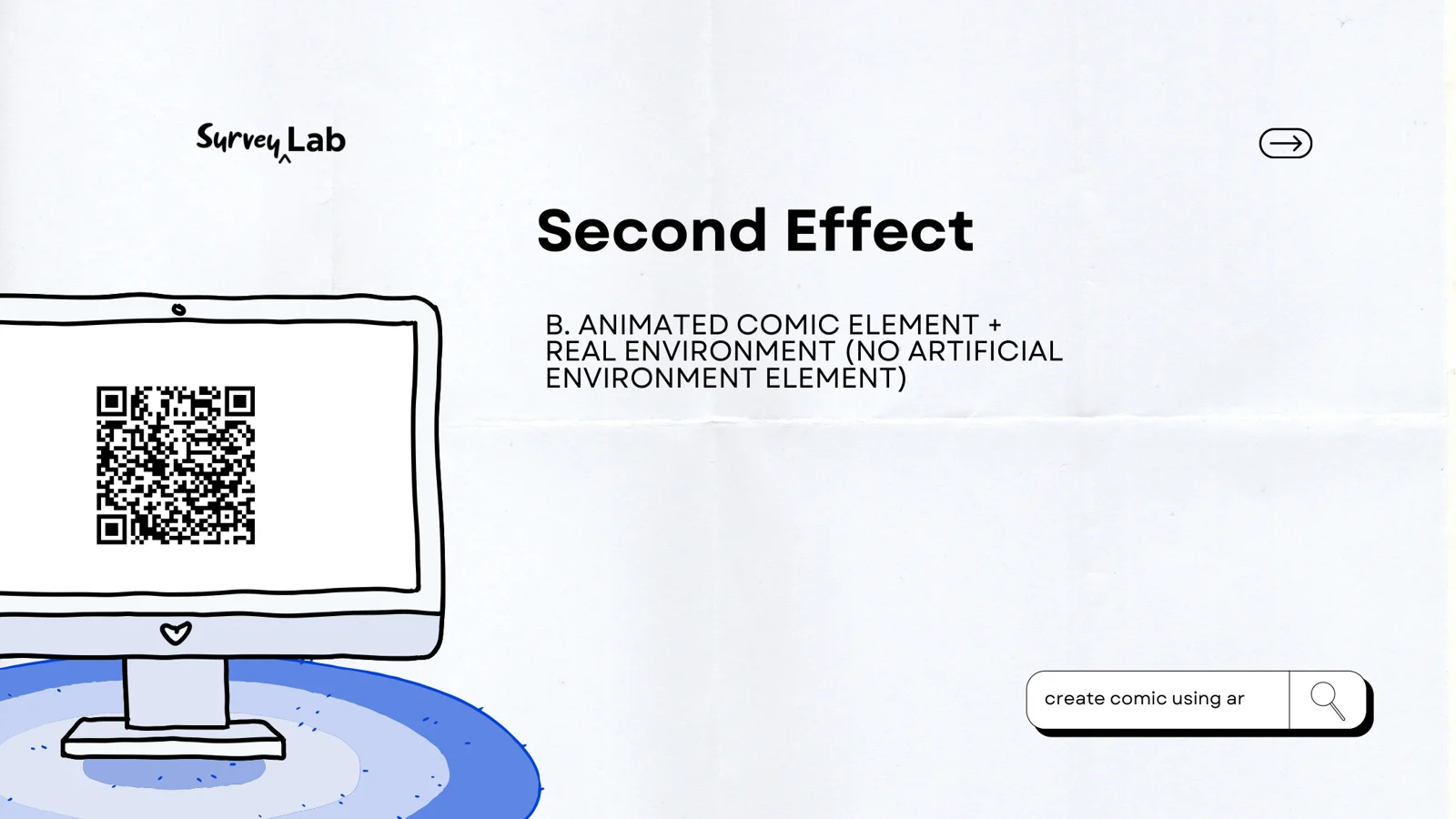
Animate the everyday
An animated comic element appears directly in the physical environment.
Animated comic element + real environment
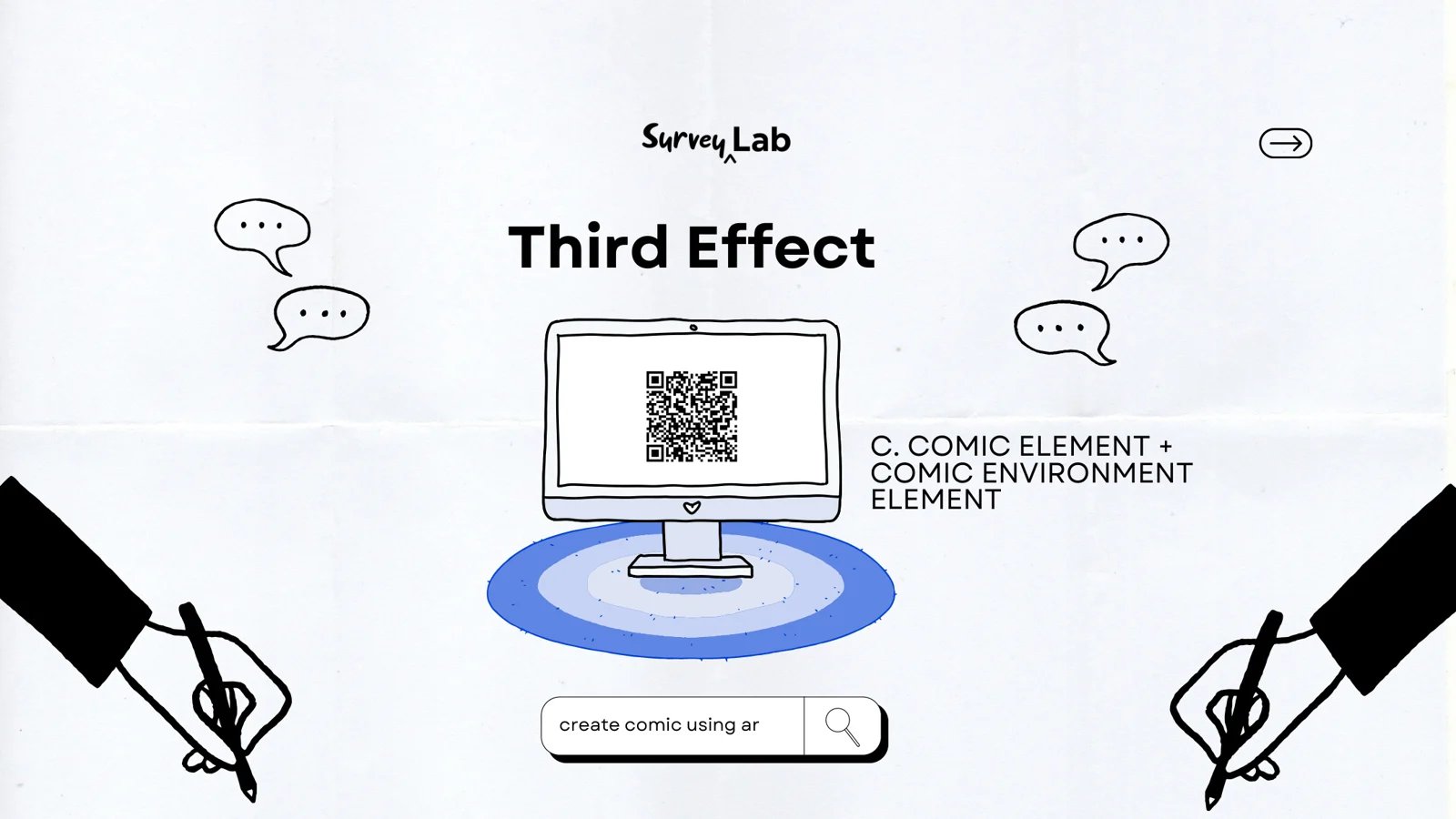
Enter a complete comic world
Characters and their illustrated environment are assembled as one spatial scene.
Comic element + comic environment
Teaching was part of the interface
The workshop had to make room for confidence as well as technique.
Some participants had never drawn before. Others arrived with a tablet, stylus and an existing visual practice. I led the classes, co-organised the sessions, created promotional material and communicated the invitation through social media.
01 · OPEN ENTRY
No drawing expertise required
The aim was to explore spatial storytelling, not to evaluate illustration skill.
02 · FLEXIBLE MATERIALS
Paper and devices could coexist
People could use the tools they already understood and move into AR from there.
03 · VISIBLE MODELS
Examples before abstraction
The three effect structures gave participants something concrete to adapt and question.
International Comic Salon Erlangen
The workshop sat beside a wider public conversation about comics as a method.
The fair also became a setting for sharing the broader research practice around comics. Together with Yuen Yi Wong, I presented “Comics as a Research Method”, connecting comicification, participatory workshops and research communication.
01 · Workshop posterPrint
Public-facing material for the hands-on workshop at the fair.
02 · Public talkLive session
The related public talk, co-presented with Yuen Yi Wong.
03 · Workshop stallFair floor
The workshop stall and shared comics display at the International Comic Salon Erlangen.
↳
These are connected activities, but not the same activity. The hands-on AR Comic Workshop is the main case study above. The Erlangen presentation documented here belongs to the wider comics research and teaching practice.
Teaching and presentation decks
The working material remains available for a closer look.
The technology was useful only when it helped a comic behave differently.
The workshop treated AR as a new compositional material rather than as spectacle. The real design problem was helping people decide what movement, sound and space could contribute to the reading experience.